New Age Pellet Products was founded in 2010 in an effort to reduce waste products from saw mills in the British Columbia Interior. All of our products are 100% pure wood fiber with no additives or binders and are made entirely from sawdust, shavings and other wood-waste products from our mills. Our goal is to maximize utilization of British Columbia’s renewable resources.
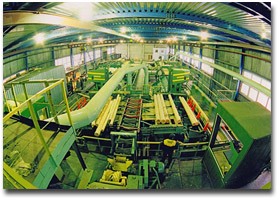

Raw by-products from our mills are received at a processing plant in chip trucks where they are classified, inventoried, and where indicated, blended. The raw product is fed into the facility where it is dried utilizing a
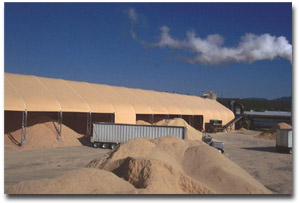
rotary drum dryer. The dry raw material is then scre-
end. The coarse product off the screens is sent to a hammer mill and then reintroduced into the stream of material that is properly sized. From this point material is fed to the pellet mills where it is densifed and then cooled. The final use of the product will determine the type of pellet mill. utilized. The pellets are then conveyed to storage bins to be shipped in bulk form or bagged.

Combustion Characteristics: Wood pellet fuel is a highly volatile fuel and therefore results in a substantially greater flame height than coal, The theoretical flame temperature for wood pellets is 2,600 degrees to 3,000 degrees F., which is very close to the normal range for coal. The combustion charac-
teristics of wood pellets are influenced by the fact that the pellets contain within their mass a large fraction of the oxygen required for combustion, which means that less combustion air is needed to be supplied.

Compared to firewood at current delivered prices, wood pellets offer a high percentage cost savings per BTU of energy. The future environmental concerns and Federal regulations will continue to provide a real need for residential wood pellets. On the industrial side, the use of densified biomass has proven to be a reliable and realistic energy source for the future. In the United States Presidents Clinton and Bush have both passed executive orders stating that where applicable biomass shall be recognized as a viable alternative. This coincides with what is being done in Northern Europe and the Scandinavian countries.